About Gurez Valley
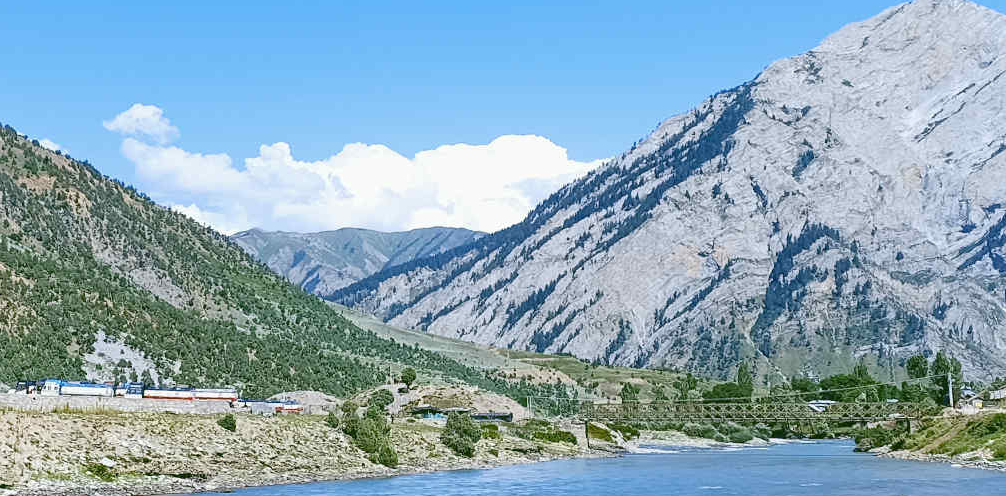
Gurez Valley is a remote mountain valley located in the north of Kashmir, India-administered Jammu and Kashmir, close to the Line of Control (LoC) that separates it from Pakistan-administered territory. Known for its dramatic alpine scenery, it lies along the upper Kishanganga (Neelum) River and is among the most picturesque yet geopolitically sensitive areas of the region.
Key facts
Location: Bandipora district, Jammu and Kashmir, India
Altitude: Around 8,000 ft (2,400 m) above sea level
River: Kishanganga (called Neelum across the LoC)
Main settlement: Dawar
Access route: Razdan Pass from Bandipora (open mainly May–November)
Geography and setting
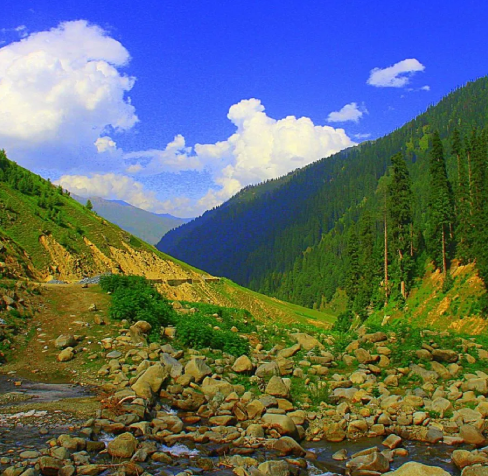
Gurez Valley stretches roughly 60 kilometers along the upper Kishanganga River, framed by snow-capped peaks of the Himalayas. The valley remains cut off for several months each winter due to heavy snowfall closing the Razdan Pass. Its strategic position along the LoC makes it one of the last inhabited valleys before the high ranges of Gilgit-Baltistan on the Pakistani side.
Culture and people
The inhabitants, known as Dards or Shins, speak Shina language, distinct from the Kashmiri language of the valley’s southern neighbors. Their traditions blend Central Asian and Himalayan influences, seen in wooden architecture, folk music, and pastoral livelihoods centered on livestock and subsistence farming.
Tourism and development
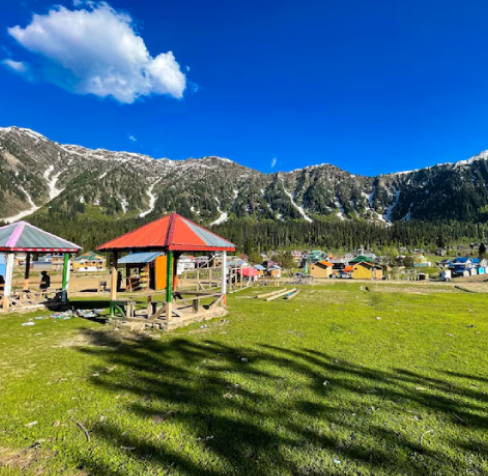
In recent years, Gurez has been gradually opening to visitors, promoted by the Jammu and Kashmir Tourism Department for eco- and adventure tourism. Attractions include the pyramid-shaped Habba Khatoon peak, alpine meadows, and the Kishanganga River’s fishing spots. Despite growing interest, limited infrastructure and restricted access during winter preserve much of its isolation and pristine character.
Strategic importance
Due to its proximity to the LoC, Gurez has historically been a sensitive military zone. Civilian tourism only resumed significantly after the early 2000s when security conditions improved. The area remains vital for India’s border surveillance and hydroelectric projects on the Kishanganga River.